
How to Launch an Oral Dissolving Strip Supplement Brand (From Idea to Shelf)
Oral dissolving strip supplements are one of the most compelling product opportunities available to supplement entrepreneurs right now. The format offers genuine bioavailability advantages over capsules, strong visual differentiation on digital shelves, and an underserved consumer market that is growing at nearly 10% annually. Yet most brand founders approaching ODF for the first time have no roadmap for how the process works — from selecting an active ingredient to holding finished product in hand. This guide walks through every stage of launching an oral dissolving strip supplement brand, with realistic timelines, cost considerations, and the compliance requirements you need to understand before you start.
Why ODF Strips Are a Strong Product Category Right Now
The global oral thin film market was valued at approximately $3.4 billion in 2024 and is forecast to grow at a 9–10% compound annual growth rate through 2030. While pharmaceutical ODF products — sublingual medications for pain, nausea, and psychiatric conditions — have driven the market historically, the nutraceutical and dietary supplement segment is the fastest-growing sub-category.
Several converging factors make this an unusually strong moment for supplement brands entering the ODF space:
- First-mover advantage: Very few supplement brands have established ODF product lines. The digital shelf is not yet saturated with strip competitors the way it is with capsule and gummy products.
- Premiumization trend: Consumers are increasingly willing to pay more for supplements with a credible science story. ODF’s bioavailability narrative — faster onset, bypass of first-pass metabolism — provides that story in a format capsules cannot match.
- E-commerce visual appeal: Strip packaging photographs well, differentiates strongly in Amazon and DTC thumbnail images, and communicates innovation at a glance.
- Consumer compliance advantage: No water required, dissolves in seconds, and fits in a wallet or pocket. For daily-use supplements, compliance drives repeat purchase — the most important metric for subscription brands.
Step 1 — Choose Your Active Ingredient and Benefit Claim

Your active ingredient selection determines everything downstream: the feasibility of ODF delivery, your regulatory classification, your label claims, and your target consumer. Not all supplement actives are suitable for ODF format — start here before engaging any manufacturer.
Criteria for ODF-Suitable Actives
The best candidates for oral dissolving strip delivery share these characteristics:
- Adequate permeability through oral mucosal tissue
- Sufficient potency at low doses — ideally 1 to 50mg per strip
- Stability in an aqueous polymer film matrix during processing and shelf life
- Benefit from rapid onset or improved bioavailability vs. swallowed forms
The strongest-performing ODF supplement categories by consumer demand and formulation suitability are sleep (melatonin, L-theanine, CBD), cognitive and energy (B12, caffeine, Rhodiola rosea), mood and calm (ashwagandha, passionflower, L-theanine), immunity (zinc, vitamin C, elderberry extract), and oral health (fluoride, xylitol, probiotic strains for oral microbiome).
Defining Your Benefit Claim
Your benefit claim must comply with FDA dietary supplement regulations under 21 CFR Part 101.93. Structure/function claims — statements about how a nutrient supports normal body structure or function — are permitted without FDA pre-approval, provided they are truthful, substantiated by competent and reliable scientific evidence, and accompanied by the required disclaimer: “This statement has not been evaluated by the Food and Drug Administration. This product is not intended to diagnose, treat, cure, or prevent any disease.”
Avoid disease claims, which are prohibited for dietary supplements regardless of format. “Supports healthy sleep” is a permissible structure/function claim. “Treats insomnia” is a disease claim that triggers drug classification.
Step 2 — Find and Vet a U.S. ODF Contract Manufacturer
This is the most consequential decision in your entire launch process. ODF manufacturing requires specialized equipment — film casting systems, precision drying ovens, die-cutting machinery — that most general supplement CMOs do not possess. The number of U.S.-based contract manufacturers with genuine nutraceutical ODF capability is small.
What to Verify in Any ODF CMO
- FDA registration: The facility must be registered with the FDA as a food or dietary supplement manufacturing facility. Verify at the FDA’s online establishment registration database.
- cGMP certification: Look for third-party audited certification — NSF International, UL, or NPA — not self-declared compliance. Request the most recent audit report and review it.
- Nutraceutical ODF experience: Many ODF manufacturers serve only the pharmaceutical market. Confirm they have formulated and produced dietary supplement strips specifically, not just Rx oral films.
- In-house analytical testing: Content uniformity, dissolution testing, and moisture analysis should be performed in-house on every commercial batch.
- Flavor development capability: Many supplement actives are intensely bitter. A CMO without robust taste-masking expertise will produce strips consumers won’t take a second time.
Atrium Scientific Group is a USA-based contract manufacturer specializing in oral dissolving films for the dietary supplement and nutraceutical market, with cGMP-certified production, in-house analytical testing, and formulation capabilities spanning custom development through commercial scale. Contact our team to discuss your project specifications.
Step 3 — The Formulation Development Process
Once you have selected a CMO, formulation development follows a structured sequence. Understanding this process helps you set realistic expectations and avoid costly timeline surprises.
Formulation Feasibility Assessment
Your CMO’s formulation team evaluates your active ingredient for ODF suitability: permeability, stability in the polymer matrix, dose achievability within standard strip dimensions, and taste profile. This stage may take two to four weeks and typically involves no production cost — it is a desktop and laboratory assessment before any material is committed.
Polymer System and Excipient Selection
The film-forming polymer (commonly hydroxypropyl methylcellulose, pullulan, or polyvinyl alcohol), plasticizers, sweeteners, flavors, and any permeation enhancers are selected and optimized for your specific active. This is where taste masking is engineered — a critical step for bitter actives like zinc, B vitamins, and CBD.
Pilot Batch Production and Testing
A small pilot batch — typically 5,000 to 10,000 strips — is produced to validate the formulation. Content uniformity, dissolution rate, moisture content, and sensory evaluation are assessed. Reformulation iterations may occur at this stage before advancing to stability testing.
Stability Testing
Accelerated stability testing (40°C / 75% relative humidity for six months, per ICH guidelines) validates shelf life. Real-time stability testing at ambient conditions runs concurrently. Most brands target a 24-month shelf life, which requires stability data to support label dating.
Step 4 — Regulatory Classification of ODF Dietary Supplements
Oral dissolving strip supplements are regulated as dietary supplements under the Dietary Supplement Health and Education Act (DSHEA) of 1994, provided they contain dietary ingredients as defined in 21 USC 321(ff) and do not bear drug claims. Manufacturing must comply with FDA 21 CFR Part 111 — Current Good Manufacturing Practice in Manufacturing, Packaging, Labeling, or Holding Operations for Dietary Supplements.
New Dietary Ingredient Notification
If your formula contains a dietary ingredient that was not marketed in the U.S. before October 15, 1994, an NDI (New Dietary Ingredient) notification must be submitted to the FDA at least 75 days before marketing. Your CMO or a regulatory consultant can help determine whether your specific ingredients require NDI notification.
Structure/Function Claim Notification
Within 30 days of first marketing a dietary supplement with a structure/function claim, you must submit a notification to the FDA. This is a notification, not an approval process — the FDA does not pre-approve claims.
Step 5 — Packaging Options for ODF Strips
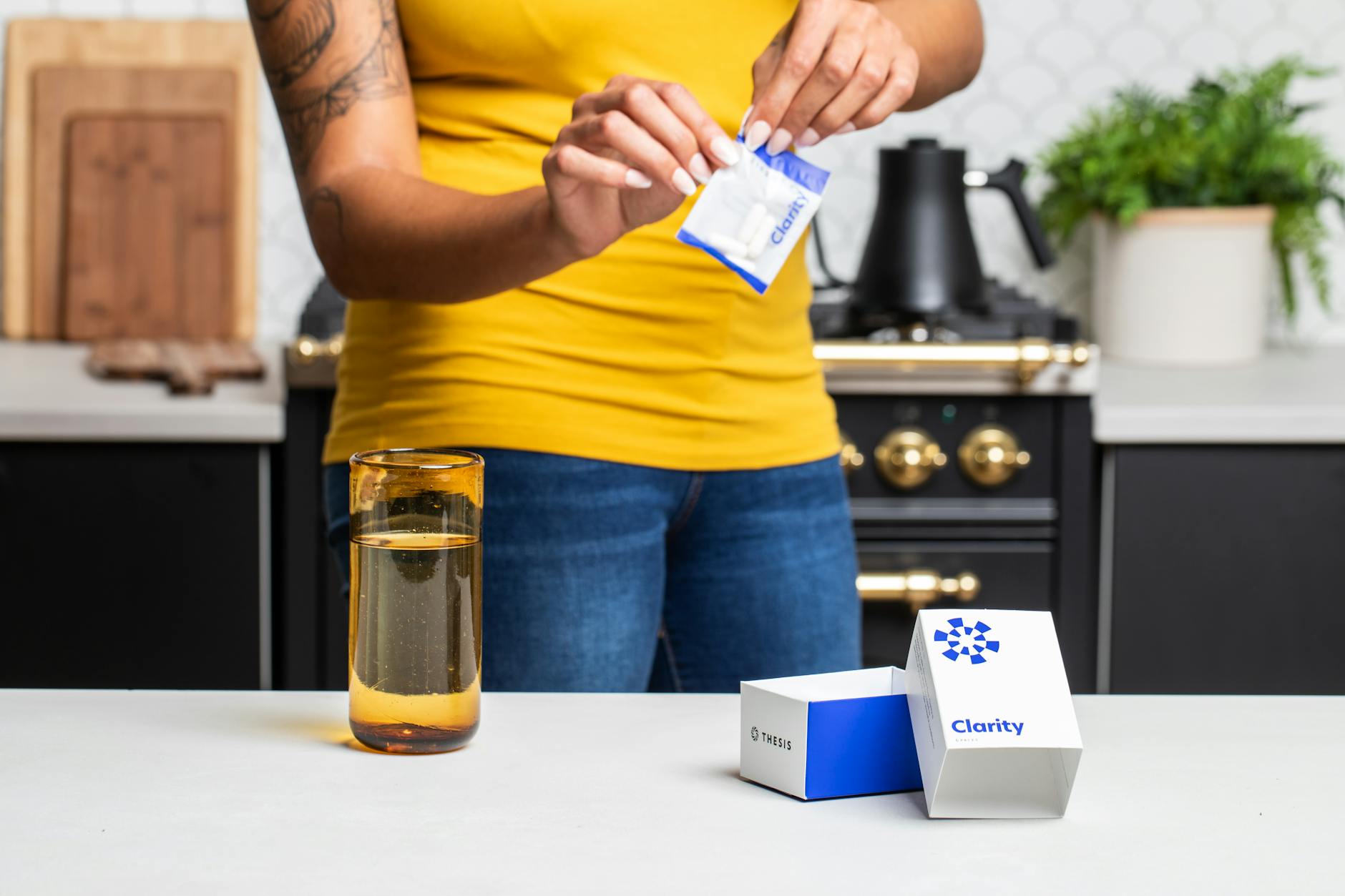
Packaging selection affects both consumer experience and manufacturing cost. The three primary formats for ODF supplement strips are:
| Format | Description | Best For | Cost Tier |
|---|---|---|---|
| Individual foil sachets | Each strip heat-sealed in a foil pouch; most common format | Premium DTC, single-serve, travel packs | Moderate to high |
| Blister card | Multiple strips in a push-through blister configuration | Retail, pharmacy channel, daily dosing | Moderate |
| Carton / booklet pack | Strips arranged in a folded booklet or matchbook-style carton | On-the-go positioning, brand differentiation | Higher |
For DTC and Amazon launches, individual foil sachets in a branded outer carton (30-count or 60-count) are the most common configuration. Each sachet provides tamper evidence, moisture protection, and a branded touchpoint that blister cards do not.
Step 6 — Labeling Requirements for ODF Supplement Strips
FDA 21 CFR Part 101 governs dietary supplement labeling. Every ODF supplement strip product must include the following mandatory label elements:
- Statement of identity: The product name, identifying it as a dietary supplement
- Net quantity of contents: Number of strips per package
- Supplement Facts panel: Serving size, servings per container, and all dietary ingredients with amounts per serving
- Ingredient list: All ingredients in descending order of predominance
- Name and address of manufacturer, packer, or distributor
- Directions for use: How and when to take the strip
- Structure/function claim disclaimer (if claims are made): The standard FDA disclaimer in a box
- Allergen declarations per FALCPA requirements
Work with a regulatory consultant or your CMO’s compliance team to review label copy before printing. Label errors are among the most common — and most preventable — causes of FDA warning letters for supplement brands.
Step 7 — MOQs, Costs, and Launch Economics
Understanding the economics of ODF manufacturing helps you build a realistic launch budget and unit economics model before committing capital.
Minimum Order Quantities
- Pilot / development batch: 5,000–10,000 strips (formulation validation; not for sale)
- First commercial run: 50,000–250,000 strips depending on the CMO and formula complexity
Cost Considerations
ODF manufacturing costs 2–4 times more per unit than equivalent capsule production, driven by specialized equipment, longer manufacturing cycle times, and higher formulation complexity. This cost is generally offset by retail price premiums: ODF strips command $0.50–$2.00 or more per strip at retail, compared to $0.15–$0.40 per capsule for equivalent supplement categories.
The strongest unit economics for ODF are in high-value, fast-acting categories — sleep, energy, mood — where the bioavailability and convenience story supports premium pricing and strong subscription retention.
Step 8 — Launch Timeline Overview
A realistic concept-to-shelf timeline for a new ODF supplement brand with a custom formulation:
- Weeks 1–4: CMO selection, formulation feasibility, active ingredient sourcing
- Weeks 5–12: Formulation development, pilot batch, sensory evaluation, reformulation if needed
- Weeks 13–20: Stability testing initiation, label design and regulatory review, packaging specification
- Weeks 21–28: Commercial batch production, QC testing, Certificate of Analysis
- Weeks 29–32: Packaging, labeling, fulfillment setup, listing creation
- Week 32+: Launch
Total: approximately 6–8 months for a custom formulation from signed manufacturing agreement to first sale. Brands using an existing or stock formula from their CMO can compress this to 10–14 weeks.
Common Mistakes to Avoid
- Choosing a CMO without verified nutraceutical ODF experience. Pharmaceutical ODF and supplement ODF are not the same process or regulatory context. Verify experience specifically in your category.
- Underestimating taste masking complexity. Bitter actives that taste acceptable in a capsule (which you swallow immediately) can make a strip product completely unusable. Budget for taste masking iterations.
- Setting dose expectations without feasibility confirmation. If your concept requires 200mg of active per strip, confirm this is achievable in your CMO’s film system before committing to formulation development.
- Skipping stability testing. Launching with an unsupported shelf life claim exposes your brand to regulatory action and consumer complaints if product degrades before the labeled date.
- Making drug claims. “Helps you fall asleep faster” (structure/function) is permissible. “Treats insomnia” (disease claim) is not. The distinction is legally significant.
- Ordering commercial quantities before validating the formula. Always complete a pilot batch and sensory evaluation before scaling to commercial production.
Frequently Asked Questions
How long does it take to launch an ODF supplement brand?
From signed manufacturing agreement to finished product ready for sale, expect 6–8 months for a custom formulation and 10–14 weeks for a stock or existing formula. The longest stage is typically formulation development and stability testing, not production itself.
What is the minimum budget needed to launch an ODF supplement brand?
Budget requirements vary significantly based on formula complexity, packaging choices, and CMO minimums. A realistic minimum for a first commercial launch — covering formulation development, pilot batch, stability testing, commercial run at minimum MOQ, packaging, and label design — typically ranges from $25,000 to $75,000 before marketing spend. Stock formula options at the lower end of CMO MOQs can reduce this range.
Do I need FDA approval to sell ODF supplement strips?
No. Dietary supplements do not require FDA pre-market approval. However, your manufacturing facility must be FDA-registered and comply with 21 CFR Part 111 cGMP requirements. You must also notify the FDA of any structure/function claims within 30 days of first marketing, and submit an NDI notification if your formula contains ingredients not marketed before October 1994.
Can I use a private label ODF formula or do I need a custom formulation?
Both options are viable. Private label (stock formula) ODF strips offer faster time to market, lower development cost, and reduced formulation risk — your CMO has already validated the formula. Custom formulation offers proprietary differentiation, formula ownership, and the ability to optimize actives specifically for your brand positioning. The right choice depends on your budget, timeline, and differentiation strategy.
What sales channels work best for ODF supplement strips?
DTC e-commerce (Shopify) and Amazon FBA are the strongest initial channels for ODF strips. The premium packaging photographs well for digital advertising, and the format’s novelty drives above-average click-through rates. Subscription models perform particularly well given ODF’s strong daily compliance — consumers who use the product consistently reorder at high rates.
Conclusion
Launching an oral dissolving strip supplement brand is a more involved process than launching a capsule product — but the market opportunity, consumer experience advantages, and competitive differentiation potential justify that investment for brands building in categories where efficacy and convenience matter. The most important decisions — active ingredient selection, CMO vetting, and regulatory classification — all happen before a single strip is produced. Getting those right makes everything downstream significantly smoother.
Atrium Scientific Group works with supplement entrepreneurs, established brands, and R&D organizations at every stage of the ODF development and manufacturing process. Contact our formulation team to discuss your concept and get a realistic assessment of feasibility, timeline, and cost.