


Pro Winning Strategies at Pure Casino to Sharpen Your Edge at Tables
When we tested table games at Pure Casino, one point came up early and kept coming back: a strategy can make play more orderly, but it cannot turn a game with a house edge into a guaranteed income stream. That sounds obvious, perhaps, yet it is easy to forget after a short winning run. We looked at the games, the betting habits that players commonly discuss, and the practical side of playing through the Pure Casino app when a quick session is more tempting than a planned one.
Our shared view is fairly simple. The best “pro” approach is less about secret systems and more about choosing sensible games, understanding the rules, controlling stakes, and knowing when the session has done enough. It is not glamorous. Still, it is more useful than chasing a pattern that was never there.
For Australian players, the useful starting point is also a realistic one. Online casino availability and gambling rules can differ by location, and players should check the rules that apply where they live. We approached the platform as a product to assess, not as a shortcut to beating probability. That distinction made our notes a lot clearer.
What a Real Edge Actually Means
In casino talk, “edge” gets used rather loosely. Sometimes it means playing a version of blackjack with more favourable rules. Sometimes it means refusing side bets with a steep house margin. Occasionally it means having an actual mathematical advantage, which is far rarer and usually depends on highly specific conditions. These are not the same thing.
For most players at online tables, sharpening an edge means reducing avoidable losses rather than creating certainty. A lower house edge, a sensible stake size, and a calm decision process can improve the quality of a session. They do not remove the basic advantage held by the casino. We found that accepting this upfront made every other decision easier.
A useful term is house edge. It describes the theoretical share a casino expects to retain over a very large number of bets. In a short session, almost anything can happen. A player can win quickly, lose quickly, or hover around even. Over time, though, the game rules matter more than a lucky feeling at the table.
The practical goal is not to predict the next hand. It is to make fewer expensive decisions while protecting the money set aside for entertainment. That is the part often left out when systems are marketed as “pro” methods.
| Approach | What it can help with | What it cannot do |
|---|---|---|
| Basic strategy in blackjack | Reduces decision mistakes based on the visible cards and rules | Guarantee a winning hand or remove the house edge entirely |
| Flat or modest fixed staking | Keeps losing streaks from escalating too fast | Change the mathematical return of a game |
| Choosing lower-edge bets | Improves expected value compared with high-margin alternatives | Make variance disappear |
| Stop limits and time limits | Supports control and prevents impulsive chasing | Recover a previous loss on demand |
There is a small but important emotional point here too. A strategy that helps someone stay inside a planned budget is valuable even if it does not beat the game. We would call that a win in the practical sense, though not in the mathematical one. The distinction may sound fussy, but it matters.
Bankroll Comes Before the First Bet
Bankroll management was the strongest common thread in our test sessions. Not because it made outcomes predictable, it did not, but because it prevented a short run of poor cards from becoming an unnecessarily large loss. Many so-called systems skip this boring part and jump straight to bet progression. We think that is backwards.
A bankroll is not simply the balance showing in the account. It is the exact amount a player is prepared to spend on casino entertainment over a chosen period. It should be separate from rent, groceries, bills, savings, debt repayments, and any money that has a job outside leisure. If the boundary is not clear, no betting plan is really doing its job.
We found a session budget works best when it is set in dollar terms before logging in. Once that figure is decided, the stake needs to be small enough to survive normal variance. A player placing $20 bets from a $100 budget has only five units. That may feel controlled for a few minutes, but it gives very little room for a bad run, and bad runs do happen.
- Set a fixed entertainment budget. Decide the maximum amount that can be lost without affecting everyday commitments, then treat it as spent once the session begins.
- Choose a stake unit before playing. Many cautious players use a small fraction of the session budget per standard bet, rather than repeatedly changing the amount after each result.
- Create both a loss limit and a finish point. The loss limit stops chasing, while a finish point can stop a decent win from being handed back during a longer session.
- Record the session briefly. A simple note of deposit, withdrawals, game, stake range, and result can reveal habits that memory smooths over.
That final step seemed almost too basic when we first compared notes. Yet memory is selective. People remember the exciting recovery, not always the dozen small reloads that came before it. A record does not make gambling less random, but it does make a player’s own behaviour easier to see.
We also suggest avoiding the idea that a bankroll must be “rebuilt” after a losing day. It does not owe anyone a comeback. If a set budget is gone, the cleanest decision is often to stop and return only when the next planned entertainment budget is available. That can feel unsatisfying in the moment. It is still more rational than increasing deposits to repair a result.
Choosing a Table Before Chasing a Result
The table choice itself is where some real improvement can happen. We compared rule displays, bet ranges, side-bet menus, and the way games present information. A familiar game is not always the best version of that game. Two blackjack tables can have materially different rules, while roulette wheels can differ in a way that is easy to miss if a player only looks at the screen design.
At blackjack, details such as the number of decks, dealer behaviour on soft 17, doubling rules, surrender availability, and blackjack payout affect the long-term maths. We would not rush through those settings. A table paying 6:5 for blackjack rather than the more favourable 3:2 arrangement can make a noticeable difference over repeated play.
In roulette, the important split is generally between single-zero and double-zero variants. A single-zero wheel usually carries a lower house edge on standard bets than a double-zero wheel. The colours and the drama are broadly the same, which is exactly why the difference is sometimes overlooked.
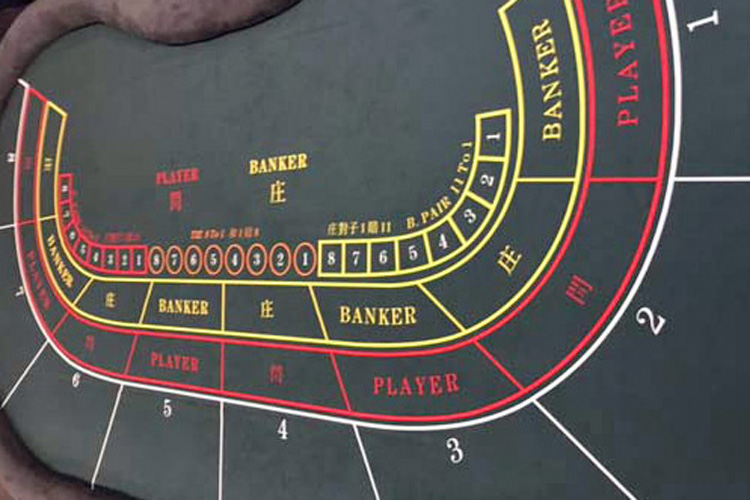
Baccarat is comparatively straightforward. The banker bet commonly has the lowest house edge among the main options, despite the commission usually taken from banker wins. The player bet is close behind. The tie bet, meanwhile, offers a much larger payout because it is much less likely to land, and its house edge is generally far higher. During our comparison, that was one of the clearest examples of a bet looking attractive because of its payout rather than because of its value.
| Game type | Generally more disciplined option | Worth checking carefully |
|---|---|---|
| Blackjack | Tables with transparent, player-friendly rules and correct basic strategy | Blackjack payout, dealer rules, side bets, minimum stake |
| Roulette | Single-zero roulette with simple outside or inside bets chosen for entertainment | Number of zero pockets and any special rule variations |
| Baccarat | Banker or player bets, with the commission clearly understood | Tie bets and side bets with larger advertised payouts |
| Live casino tables | A pace and minimum bet that fit the planned bankroll | Fast rounds, optional extras, and pressure to keep betting |
We would add one caveat. The theoretically best table is not always the best fit for a particular person. If the minimum stake forces a player to bet more than planned, it is not a suitable table, even if the rules are excellent. A lower minimum and slower pace can be a better practical choice.
Blackjack, Roulette and Baccarat, What Strategy Really Does
Blackjack is usually where strategy has the most visible role. Basic strategy tells a player what action is statistically preferable for a given hand and dealer up-card. It can feel mechanical at first. In fact, that is part of its value. It replaces guesses such as “the dealer looks due to bust” with decisions based on the known structure of the game.
We noticed that the difficult hands are where players are most likely to abandon a plan. A stiff total, a dealer showing a strong card, or a recent loss can all prompt a decision made from frustration rather than logic. Using a reliable basic strategy reference, where allowed, can reduce those errors. It does not mean every correct choice wins. Plenty will not.
Roulette has a different character. There is no decision chart that turns a red-or-black wager into an advantage. Outside bets may produce more frequent smaller wins, while straight-up number bets produce less frequent larger ones. The expected return remains shaped by the wheel’s rules. Choosing a bet style is mainly about volatility and enjoyment, not finding a hidden loophole.
Baccarat is even more direct. The results of prior hands do not alter the probability of the next hand in the way scoreboards imply. Road maps and bead patterns can be interesting to watch, and we understand why players enjoy them. But they are records of what has happened, not forecasts. We treated them as decoration rather than data.
The Myths We Would Leave at the Door

The Martingale system is probably the best-known myth with a professional-sounding reputation. The idea is to double the wager after every loss so that one win recovers earlier losses plus a small profit. On paper, it seems tidy. In a real session, table limits, finite bankrolls, and ordinary losing streaks get in the way very quickly.
If a player starts at $5, a run of losses soon asks for $10, $20, $40, $80, $160 and beyond. The total exposure rises much faster than many people expect. We do not see this as a strategy for managing risk. It is a method for concentrating risk at exactly the point a player is already under pressure.
Reverse Martingale systems, Fibonacci progressions, and other staking patterns have a similar limitation. They can change the shape of wins and losses, but they cannot change the underlying expected value. A progression may feel disciplined because it follows rules. That feeling is not the same as an edge.
Another common belief is that a machine, wheel, or live table is “due”. Random outcomes can create clusters. Five reds in a row can happen. So can several banker results, or a string of dealer blackjacks that seems almost personal. Randomness does not always look evenly mixed in small samples. We found that reminding ourselves of this stopped us from treating a streak like a signal.
There is a related trap in trying to win back a loss before ending the session. This is often called chasing, and it tends to be one of the costliest habits because the target is emotional rather than planned. A loss does not make the next wager more likely to win. It only makes the urge to act feel stronger.
A Calmer Session Routine Has More Value Than It Sounds
Our most useful test was to create a short pre-play routine and follow it regardless of the game. It was not exciting, frankly. But it created a pause between opening the casino and placing money on a table. That pause is often where good judgement either happens or does not.
- Check the available balance and set the exact session limit before selecting a table.
- Read the game rules, table minimum, maximum, and payout details instead of assuming they match a previous table.
- Decide the stake size and avoid changing it simply because the last hand won or lost.
- Use a timer or natural stopping point, particularly with live games where the next round arrives quickly.
- Leave if the session becomes tense, distracted, or focused on recovery rather than entertainment.
This does not mean every session must be joyless and clinical. Casino games are supposed to have an entertainment element. Still, there is a difference between enjoying a few hands and playing on autopilot. The latter was easier to slip into than we expected, especially when the interface made re-entering the same stake almost effortless.
Taking breaks matters more than it gets credit for. A break interrupts the story players create around a run. After five losses, the story might be “we need one good hand.” After a pause, it is easier to see that nothing is required. The same applies after a win, when confidence can quietly turn into larger bets.
Bonuses, Payments and the Fine Print Around Table Play
Table-game strategy does not exist in isolation from the account side of a casino. We checked bonus terms because promotions can look generous while contributing very little towards wagering requirements on blackjack, baccarat, or roulette. Some table games may contribute at a reduced rate, while some side bets may be excluded entirely. The promotion is not automatically poor value, but it needs reading before money is committed.
A sensible question is whether the bonus conditions suit the intended game and budget. If a requirement would push a player into staking for much longer than planned, skipping the offer can be the more controlled choice. There is no prize for accepting every promotion. We would rather have a smaller, clearer session than one stretched by conditions we did not fully want.
The same careful approach applies to deposits and withdrawals. Players should check available payment methods, processing information, verification requirements, and any minimum withdrawal amounts before playing. This is not a “winning system”, but it reduces surprises. A trustworthy player experience is usually built from these ordinary details, not only from the games themselves.
We also recommend using any available responsible gambling tools where needed, including deposit limits, session reminders, cooling-off options, or self-exclusion. These tools are not a sign that someone has failed at strategy. They are practical controls, and practical controls are the whole point of a measured approach.
Conclusion
Conclusion: after comparing common table-game tactics at Pure Casino, we came away with a restrained answer. What helps is selecting lower-edge game versions, learning correct blackjack decisions, avoiding costly side bets, setting a realistic bankroll, and ending a session according to a plan. What is mostly myth is the promise that betting progressions, hot streaks, patterns, or determination can force a win. The sharper edge is not magical. It is simply the habit of making informed choices, keeping stakes affordable, and treating gambling as entertainment rather than a financial plan.
FAQ
FAQ: Can bankroll management guarantee profit? No. Bankroll management cannot alter game odds or ensure a winning result. It can help a player control how much is risked and reduce the chance of a short losing run consuming the entire budget.
Is blackjack the best table game for strategy? Blackjack is often the table game where player decisions can have the greatest effect, especially when correct basic strategy is used and the rules are favourable. It still has a house edge, and the exact rules matter.
Do roulette betting systems work? Systems can organise stake sizes, but they do not change the probability of individual spins or the long-term house edge. Large progressions can also expose a bankroll to fast-growing bets.
Should players take every casino bonus? Not necessarily. It is worth checking wagering requirements, game contribution rates, expiry periods, and withdrawal conditions. A bonus that does not fit the planned budget or preferred table games may not be useful.
What is the simplest responsible approach? Set a spending limit before playing, use stakes that suit that limit, avoid chasing losses, take breaks, and stop when the budget or time limit is reached. If gambling stops feeling enjoyable or manageable, it is sensible to step away and use the platform’s support tools.