
Why Supplement Brands Are Replacing Capsules With Dissolvable Strips
The capsule has dominated dietary supplement delivery for decades. It is familiar, manufacturable at scale, and accepted by consumers. But over the last several years, a measurable shift has been underway: supplement brands — from venture-backed DTC startups to established health and wellness companies — are increasingly choosing oral dissolving film (ODF) strips over capsules and tablets as their primary delivery format. This is not a niche trend. The global oral thin film market is estimated at over $3.4 billion and is growing at a compound annual growth rate of approximately 9 to 10 percent. Something is driving that shift, and it is more than novelty.
The Market Shift: From Swallowing to Dissolving
The supplement industry’s relationship with delivery format has always been driven by a combination of consumer behavior, clinical evidence, and manufacturing economics. Capsules won for decades because they were inexpensive to produce, easy to dose, stable, and familiar to consumers trained on pharmaceutical pill-taking habits.
That calculus is changing. The DTC supplement market — built on e-commerce, subscription models, and premium positioning — rewards differentiation more heavily than the mass-retail channel did. Consumers are more educated about bioavailability, ingredient science, and delivery mechanisms. And a new generation of contract manufacturers has brought ODF production capability into the accessible price range for emerging brands, making the switch economically viable at low minimum order quantities.
Seven Reasons Brands Are Making the Switch
1. Faster Onset and Higher Bioavailability for Key Actives
The central scientific argument for ODF strips over capsules is transmucosal absorption. When a supplement is swallowed in capsule or tablet form, the active ingredients must dissolve in the GI tract, be absorbed through the intestinal mucosa, and pass through the liver before entering systemic circulation — a process that can take 30 to 90 minutes and results in significant active ingredient loss through first-pass metabolism.
Sublingual ODF strips, placed under the tongue, deliver actives directly through the sublingual mucosa into the highly vascularized submucosal tissue, from where they enter the bloodstream more rapidly and with less first-pass metabolic attrition. For supplement categories where speed of onset matters — sleep (melatonin), acute energy (B12, caffeine), mood support (L-theanine), anxiety support (ashwagandha), and discomfort relief — the pharmacokinetic advantages of sublingual delivery are clinically meaningful and consumer-perceptible.
2. No Water Required
The “no water required” benefit may sound mundane, but it is one of the most powerful consumer compliance drivers in the supplement industry. Survey data consistently shows that a significant percentage of supplement users skip doses because they do not have water available or find swallowing pills inconvenient. ODF strips dissolve in seconds with saliva — at the gym, on a flight, during a meeting, in bed before sleep. For a melatonin strip, this is the difference between taking it reliably every night and leaving it on the nightstand.
Higher compliance translates directly to better product outcomes for consumers, and for subscription-based DTC brands, better outcomes translate to higher retention rates and longer customer lifetime value. ODF’s compliance advantage is not just a selling point — it is a business model advantage.
3. Shelf Differentiation in a Crowded Market
Walk through the supplement aisle at any major retailer, or browse the top 100 supplements on a major e-commerce platform, and the visual environment is overwhelmingly dominated by bottles of capsules and tablets. The packaging is interchangeable. The product form is identical. In this environment, a thin-film strip product in a sleek, booklet-style dispenser or carton packaging stands out immediately — not as a gimmick, but as a signal of formulation innovation.
For brands competing on premium positioning, the physical product form matters. A dissolvable strip carries an implicit message about scientific sophistication and attention to consumer experience that a generic capsule does not. This positioning premium translates to higher retail price points: ODF supplement products typically command a 20 to 40 percent price premium over equivalent capsule formulations in the same category.
4. Expanding Consumer Access: Elderly and Pediatric Markets
Dysphagia — difficulty swallowing — affects an estimated 15 percent of the general population and up to 45 percent of adults over 60. For supplement brands targeting healthy aging, senior wellness, or any category with a significant older consumer demographic, capsule-format products represent a compliance barrier that ODF strips eliminate entirely. The same applies to pediatric supplement applications: ODF strips designed for children’s use can deliver precise doses of vitamins, probiotics, or botanical actives without the choke risk of tablets or the gag reflex associated with some liquid supplements.
These are not small markets. The healthy aging supplement category is one of the fastest-growing segments in the industry, and the children’s supplement market is growing rapidly alongside increased parental interest in preventive pediatric nutrition. ODF format access to these segments represents a meaningful addressable market expansion for brands willing to reformulate.
5. Superior Consumer Experience and E-Commerce Appeal
E-commerce supplement buying is driven by product photography, unboxing experience, and the visual story a product tells in a 600-pixel product image. A carton of individually wrapped dissolving strips photographs strikingly well. The product conveys precision, modernity, and scientific credibility in a way that a bottle of capsules simply cannot.
Beyond photography, the user experience of a dissolvable strip — the immediate sensory feedback of dissolution, the flavor delivery, the ritual of a strip that dissolves in seconds — creates a moment of product engagement that capsules do not. This creates stronger product memory, more frequent positive reinforcement, and a stronger basis for subscription retention and repeat purchasing.
6. Taste Masking for Bitter or Unpleasant Actives
One of the persistent challenges in supplement formulation is managing the taste profile of bitter, earthy, or off-flavored active ingredients. Ashwagandha, turmeric, certain amino acids, and herbal extracts can have challenging taste profiles that make consumers less likely to take them consistently.
ODF strips address taste masking at the formulation level through two mechanisms: flavor layering within the film matrix (sweeteners, flavor compounds, masking agents can be incorporated precisely) and nano-encapsulation of bitter actives in polymer microspheres that delay flavor release until the strip has dissolved and actives have already been absorbed. Atrium Scientific’s proprietary nano-encapsulation technology was developed in part to address this challenge, enabling ODF strips with excellent taste profiles for even challenging active ingredients.
7. Precise, Uniform Dosing
Liquid supplements (tinctures, drops, beverages) suffer from dosing variability from the consumer end — dropper measurement is imprecise and inconsistent. Capsules and tablets deliver precise doses but are dependent on correct fill and compression at manufacturing. ODF strips achieve both: the manufacturing process for high-quality ODF films distributes actives uniformly throughout the polymer matrix, resulting in precise dose delivery per strip with very tight unit-to-unit variability. For brands making specific bioavailability or dosing claims, this precision matters.
The Categories Leading the Shift
Not every supplement category is equally well positioned for ODF adoption. The categories seeing the strongest demand for ODF strip formats share a common attribute: they benefit meaningfully from fast onset, high compliance, or consumer experience differentiation.
Sleep Supplements
Melatonin ODF strips have become one of the most commercially successful ODF supplement formats. The fast-onset argument is most powerful here: a melatonin strip that begins absorbing immediately through the sublingual mucosa is substantially more effective than a capsule that takes 30 to 60 minutes to dissolve in the GI tract when a consumer is trying to fall asleep. Sleep is also a high-compliance category — consumers who find a product that works will repurchase reliably, making it ideal for subscription models.
Energy and Cognitive Performance
Caffeine, B12, L-theanine, and nootropic blends are natural fits for ODF delivery. Energy consumers are often mobile and water-limited (pre-workout, mid-commute, between meetings), making the no-water-required benefit directly relevant. Fast onset means the energy or focus effect begins during, not after, the activity the consumer is trying to support.
Immunity and Wellness
Vitamin C, zinc, elderberry, and vitamin D strips position well in the immunity category, particularly for on-the-go wellness consumers and parents managing children’s supplement intake. The precision dosing and flavor versatility of ODF formats make them particularly appealing for pediatric immunity products.
Mood, Stress, and Anxiety Support
L-theanine, ashwagandha, CBD, and adaptogen blends — the building blocks of the mood support supplement category — benefit from ODF delivery both for onset speed and for taste masking. Many of the most effective mood-support actives have challenging taste profiles that ODF can address more effectively than capsules (which merely delay the taste issue) or gummies (which require sugar and are dose-limited).
Challenges of the Switch — and How to Address Them
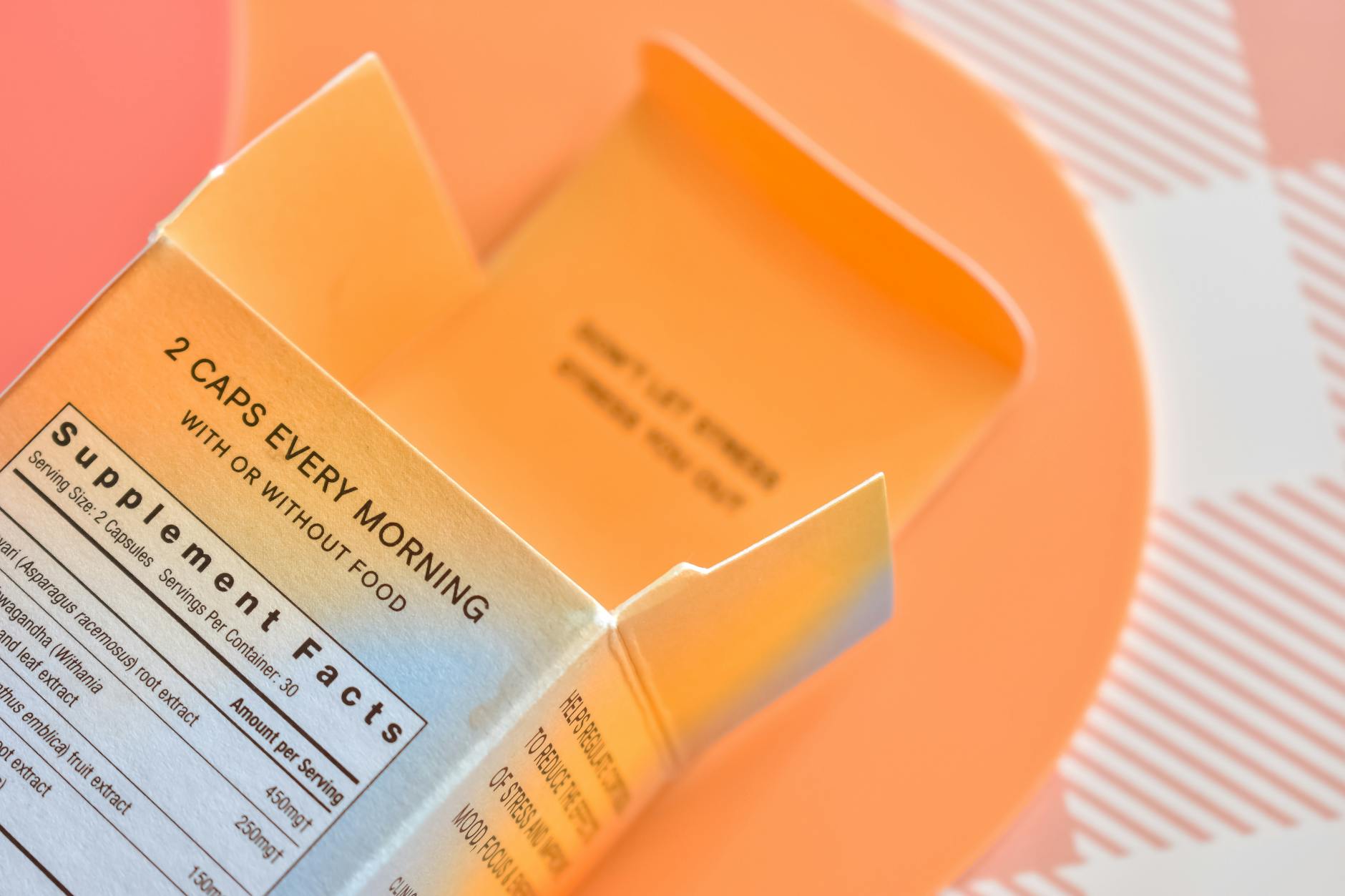
Switching from capsule to ODF format is not without challenges. Brands considering the transition should understand the key formulation and manufacturing considerations:
Active Loading Limits
ODF strips typically accommodate active loads up to 15 to 30 mg per strip for sublingual formats and up to higher concentrations for buccal films. High-dose supplements — products requiring 500 mg or more of active per serving — may need multi-strip servings or are better suited for other formats. The ODF format is most advantageous for high-potency, low-mass actives: melatonin (0.5 to 10 mg), B12 (500 to 1000 mcg), CBD (5 to 25 mg), L-theanine (50 to 200 mg).
Stability Requirements
Film moisture content, packaging requirements, and stability conditions differ from capsules. ODF strips are typically more sensitive to humidity and require controlled-humidity packaging (individual foil sachets or hermetically sealed multi-strip packaging). Brands should plan for stability testing to establish labeled shelf life and storage conditions.
Finding the Right CMO
The most practical challenge for brands considering the ODF switch is manufacturing access. Genuine ODF film manufacturing capability — industrial-grade film casting equipment, temperature-controlled drying infrastructure, and the polymer science expertise to formulate stable, uniform films — is not widely distributed in the U.S. contract manufacturing landscape. Most supplement CMOs offer capsule, tablet, and powder filling; few have ODF capability. Identifying a qualified ODF contract manufacturer is the critical first step.
How to Evaluate an ODF Contract Manufacturer for Supplement Brands
When evaluating contract manufacturers for an ODF supplement product, ask the following questions:
- What is the facility’s ODF manufacturing capacity? How many ODF SKUs are currently in production? Can they provide examples or samples?
- What active loading concentrations have they achieved? Push them on the specific actives you need — melatonin, CBD, B12, ashwagandha — and ask for demonstrated loading data.
- What polymer systems do they work with? HPMC, pullulan, and PVA each have different solubility, dissolution, and stability profiles. A capable ODF CMO should be able to recommend the right polymer for your application.
- Do they have in-house taste masking capability? Including nano-encapsulation or polymer complexation for bitter actives?
- What is the MOQ and lead time? High-throughput ODF manufacturers may have MOQs of 100,000 or more — verify that the CMO can accommodate your launch volume without forcing excessive inventory.
- Is the facility FDA-registered and cGMP-certified? For dietary supplement-classified ODF products, 21 CFR Part 111 compliance is required.
Atrium Scientific: ODF Contract Manufacturing With a Low Entry Point

Atrium Scientific Group manufactures HarmonyFilm oral dissolving films and sublingual strips at its FDA-registered, cGMP-certified facility in Garden Grove, California (Orange County). The HarmonyFilm platform was developed by polymer science PhDs and incorporates proprietary nano-encapsulation and complexation technology for active loading, taste masking, and controlled dissolution.
For supplement brands evaluating the ODF transition, Atrium offers:
- Low MOQ from 3,000 units — accessible for test launches without large inventory commitments
- Custom formulation development — from concept through commercial production, with in-house R&D support
- Taste masking technology — nano-encapsulation capability for bitter or challenging actives
- Multiple polymer systems — HPMC, pullulan, and custom matrix development for specific dissolution and stability requirements
- Private label options — stock ODF formulations for common actives enabling faster launch timelines
- FDA-registered, cGMP facility — supports dietary supplement, cosmetic, and oral care ODF product classifications
Considering the switch from capsules to dissolvable strips? Contact Atrium Scientific to discuss your formulation requirements and get a quote for ODF contract manufacturing.
Page last updated: April 19, 2026
For more context, see our guide on oral dissolving film contract manufacturing.
For more context, see our guide on what oral dissolving films are.