
Nutraceutical Contract Manufacturing: The Complete Guide for Health and Wellness Brands
Nutraceutical contract manufacturing is the production backbone of the global nutraceutical industry’s $300 billion annual output. Whether you’re launching a branded supplement line, expanding a pharmaceutical portfolio into consumer health, or developing a functional wellness product, understanding the nutraceutical contract manufacturing landscape — regulatory requirements, dosage form selection, the 7-stage production process, and manufacturer vetting — is what separates brands that reach market successfully from those that burn time and capital on poor partnerships.

What Is Nutraceutical Contract Manufacturing?
Nutraceutical contract manufacturing is the outsourced production of nutraceutical products — dietary supplements, functional foods, fortified beverages, and health-adjacent consumer products — by a specialized manufacturing organization (CMO or CDMO). Brands contract with CMOs to leverage manufacturing infrastructure, regulatory expertise, formulation capabilities, and quality systems without the capital expenditure of building in-house production capacity.
In the US market, the vast majority of nutraceutical products are regulated as dietary supplements under the Dietary Supplement Health and Education Act (DSHEA) and must be manufactured in compliance with 21 CFR Part 111 Current Good Manufacturing Practice regulations. This regulatory framework — enforced by the FDA — establishes standards for ingredient identity testing, batch production records, quality control testing, labeling accuracy, and consumer complaint handling.
The 7-Stage Nutraceutical Contract Manufacturing Process
Stage 1: Product Brief and Regulatory Scoping
The engagement starts with a detailed product brief covering target consumer, desired efficacy or health benefit, regulatory classification (supplement vs. drug vs. cosmetic vs. food), distribution channels (DTC, retail, Amazon, export), and target markets. A competent CMO challenges assumptions at this stage — clarifying whether a proposed ingredient qualifies as a dietary ingredient under DSHEA, whether a health claim requires substantiation or an NDI notification, or whether the target dosage form is technically viable for the formulation concept and intended use population.
Stage 2: Formulation Development
For custom nutraceutical formulations, the CMO’s R&D team develops a formula based on the product brief — selecting ingredient grades (food-grade vs. pharmaceutical-grade), establishing target dosages and tolerances, designing the delivery system architecture (capsule shell type, ODF matrix composition, tablet excipient selection, suppository base), and addressing specific formulation challenges such as taste masking for bitter actives, stability of oxygen-sensitive ingredients, or bioavailability enhancement strategies. Prototype batches are developed for internal review and sensory panel evaluation.
Stage 3: Analytical and Stability Testing
Stability testing validates that the formulation maintains potency, quality characteristics, and safety over its claimed shelf life under real-world storage conditions. For dietary supplements, this typically means 12–24 months at room temperature plus accelerated aging studies at elevated temperature and humidity. Analytical testing — HPLC for active potency, microbial enumeration, heavy metals screening, dissolution testing — validates that finished batches meet predetermined release specifications. CMOs with in-house analytical capability return these results significantly faster than those using external labs exclusively.
Stage 4: Regulatory Documentation Package
Before commercial production, the CMO prepares market-specific regulatory documentation. For the US, this includes Supplement Facts panel compliance review, structure/function claim substantiation documentation, NDI assessment, and FDA facility registration confirmation. For international markets — EU, UK, Australia, Canada — additional documentation including certificates of free sale, cGMP certificates, and country-specific registration materials are required. A CMO with strong regulatory expertise can significantly compress time-to-market for international launches.
Stage 5: Commercial Scale-Up and Pilot Batch
Bench-scale formulas must be transferred to commercial production equipment. Scale-up introduces new variables — blending dynamics, compression forces, mixing times, film-casting conditions — that can affect content uniformity, dissolution characteristics, and physical properties. A pilot batch at commercial scale validates consistent performance before the first full production run is committed and ingredients are consumed.
Stage 6: Commercial Production and QC Release
Commercial production under cGMP conditions generates the batch production record — a legally required document capturing every step of the manufacturing process in real time. Finished product QC testing against predetermined release specifications triggers batch release. Under 21 CFR Part 111, no batch can be released for distribution without a QC review verifying that all specifications were met and all required tests were conducted and passed.
Stage 7: Ongoing Partnership and Supply Chain Management
The strongest nutraceutical contract manufacturing relationships function as long-term partnerships. Ongoing support includes formulation updates as new clinical evidence emerges, MOQ adjustments as volumes scale, regulatory monitoring for ingredient status changes (NDI notifications, FDA draft guidance updates), and proactive supply chain management around ingredient availability and lead time volatility. The best CMOs invest in understanding your brand’s growth trajectory — not just executing individual batch orders.
Nutraceutical Dosage Forms: Capabilities and Trade-offs
Capsules, Softgels, and Tablets
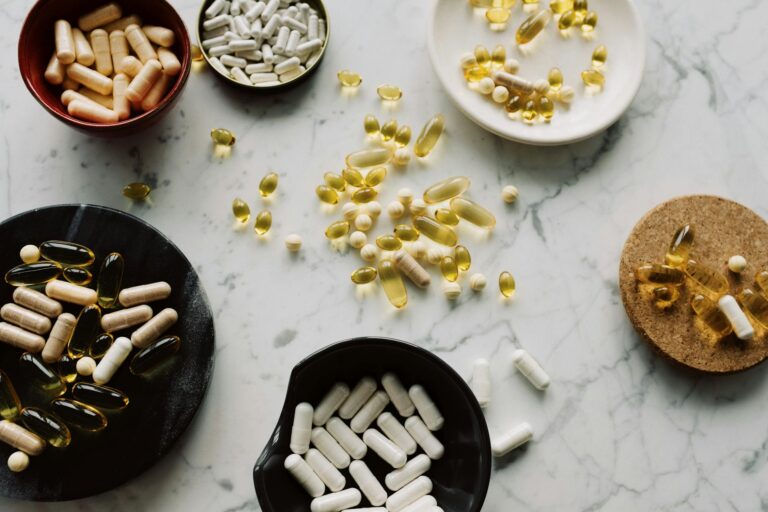
The workhorses of the nutraceutical industry. Hard-shell capsules (vegetarian or gelatin) accommodate powders and granules well, with straightforward fill-weight control. Softgels are preferred for oil-based actives and bioavailability-sensitive lipid-soluble nutrients. Tablets offer the highest compression density and longest shelf stability but require more formulation investment to achieve acceptable disintegration. All three formats are broadly available from US contract manufacturers, have established raw material supply chains, and are well-accepted by retailers and consumer demographics.
Oral Dissolving Films (ODF) and Sublingual Strips
ODF strips represent the premium tier of nutraceutical delivery innovation — thin, water-soluble films that dissolve on the tongue in seconds, delivering the active directly into oral mucosa for rapid, first-pass-avoiding absorption. ODFs show superior bioavailability for specific actives (melatonin, CBD, B-vitamins, nootropics) compared to capsules, while eliminating the swallowing barrier that reduces compliance in elderly, pediatric, and pill-averse consumers. Atrium Scientific is one of the few US-based FDA-registered CDMOs producing ODFs at commercial scale.
Powders, Stick Packs, and Sachets
Powder formats offer maximum dosage flexibility and are preferred for pre-workout, protein, electrolyte, and functional beverage applications where per-serving doses are too large for encapsulation. Single-serve stick packs combine powder convenience with on-the-go portability and packaging premiumisation. Both formats carry relatively low MOQs compared to solid dosage forms and support flexible flavouring, sweetener, and colour systems.
Specialty Formats: Suppositories, Topicals, and Oral Care
Vaginal and rectal suppositories, topical gels and creams, and oral care products (whitening strips, breath strips, mouthwash) require specialized formulation infrastructure and regulatory expertise unavailable at most generalist contract manufacturers. These formats command significant retail price premiums, serve wellness categories — sexual health, anal wellness, dermatology, oral care — with strong brand differentiation potential and growing consumer demand, and carry lower competitive density from a manufacturing capability standpoint.
US Regulatory Framework for Nutraceutical Contract Manufacturing
The FDA regulates dietary supplement nutraceuticals under DSHEA as a distinct category. Key regulatory obligations for nutraceutical brands using contract manufacturers:
- cGMP compliance: Your CMO must operate under 21 CFR Part 111 — verifiable via FDA facility registration database
- Ingredient safety: You are responsible for every ingredient’s safety. NDI notifications are required for ingredients not in the US food supply before October 15, 1994
- Claim compliance: Structure/function claims must be truthful, substantiated, and accompanied by the required FDA disclaimer. Disease claims are prohibited for dietary supplements
- Labeling requirements: Supplement Facts panel, serving size, daily values, ingredient disclosure, and mandatory warning statements must comply with 21 CFR Part 101
- Adverse event reporting: Serious adverse events must be reported to the FDA within 15 business days of receiving notice
The NIH Office of Dietary Supplements maintains a comprehensive database of ingredient-level research, safety assessments, and regulatory guidance useful for claim substantiation and ingredient qualification documentation.
Selecting a Nutraceutical Contract Manufacturer: 8 Priority Criteria
- Dosage form capability: Your CMO must produce your target format in-house — not via subcontracting to an unnamed third party
- FDA registration and cGMP certification: Verify the facility registration number directly with the FDA database
- In-house formulation R&D: Particularly critical for ODFs, suppositories, topicals, and other complex formats
- Analytical testing scope: Confirm what testing is in-house vs. outsourced, and review a sample CoA
- MOQ alignment: First-run and repeat-run minimums must be compatible with your launch volume and budget
- Documentation quality: Request a CoA and batch record template before committing to a production relationship
- Lead time track record: Ask for average lead times by format over the past 12 months, not just quoted estimates
- References: Request three active client references in your product category and actually call them
Why Atrium Scientific for Nutraceutical Contract Manufacturing
Atrium Scientific is a California-based FDA-registered CDMO specialising in advanced nutraceutical dosage forms: oral dissolving films, sublingual strips, vaginal and rectal suppositories, dental whitening strips, topical gels, capsules, and oral care liquids. In-house R&D develops custom formulations from concept briefs, our in-house HPLC laboratory accelerates analytical QC release, and our low-MOQ programs serve brands from first launch through to commercial scale.
We’ve helped brands across categories including women’s health, nootropics, oral care, sports nutrition, and sexual wellness — from first-SKU launches to multi-format product line expansions. Our documentation package is accepted by major US retailers, Amazon, and international regulatory bodies including TGA and Health Canada. For the formulation development side of the process, see our custom supplement formulation guide. For private label specifically, our private label supplement manufacturer selection guide covers the full evaluation framework.
Contact our nutraceutical manufacturing team to discuss your project →
Planning a nutraceutical product launch? Speak with Atrium Scientific’s manufacturing team about formulation, MOQ, dosage forms, lead times, and regulatory documentation.
Frequently Asked Questions: Nutraceutical Contract Manufacturing
What is the difference between nutraceuticals and dietary supplements?
The terms are often used interchangeably in industry. “Nutraceuticals” broadly refers to food-derived products with health benefits beyond basic nutrition — including dietary supplements, functional foods, and fortified beverages. In the US regulatory framework, most nutraceuticals sold as capsules, tablets, or powders are classified and regulated as dietary supplements under DSHEA and must comply with 21 CFR Part 111 cGMP regulations.
Do nutraceuticals require FDA approval?
No. Dietary supplement nutraceuticals do not require FDA pre-market approval. Manufacturers must be FDA registered and operate under 21 CFR Part 111. NDI notifications are required for ingredients not in the US food supply before October 1994. Brands are responsible for product safety, truthful labeling, and substantiated structure/function claims.
What is the typical MOQ for nutraceutical contract manufacturing?
MOQ varies by dosage form. Capsules typically start at 5,000–25,000 units. Oral dissolving films start at 50,000 units at specialty manufacturers. Gummies require 10,000–50,000 units typically. Powders and stick packs often start at 1,000–5,000 units. Always confirm MOQ per dosage form directly with your manufacturer candidate.
How is nutraceutical contract manufacturing different from pharmaceutical manufacturing?
Pharmaceutical manufacturing is regulated under 21 CFR Parts 210 and 211 (drug cGMP), requires FDA drug approval, and must meet stricter purity, sterility, and potency specifications. Nutraceutical supplement manufacturing operates under 21 CFR Part 111, which is less stringent but still mandates identity testing, batch records, and QC release. Some specialty formats like vaginal suppositories may need to meet aspects of both frameworks depending on their regulatory classification and target market.