
FDA Dietary Supplement Labeling Requirements: A Brand Owner’s Complete Guide
FDA dietary supplement labeling requirements govern every word, number, and graphic on your supplement’s label — and getting them wrong can result in FDA warning letters, import alerts, retailer rejections, or product recalls. For brand owners working with a contract manufacturer, understanding what FDA requires on your label is non-negotiable before you ever print a single unit. This guide covers the complete framework for dietary supplement labeling, the three categories of claims you can and cannot make, and the most common mistakes that draw regulatory scrutiny.
What FDA Requires on Every Dietary Supplement Label
The FDA’s Dietary Supplement Labeling Guide and 21 CFR Part 101 establish the mandatory elements every dietary supplement label must include. Missing any of these elements is a labeling violation that FDA can act on at any time — including when your product is already on a retailer’s shelf.
The Supplement Facts Panel
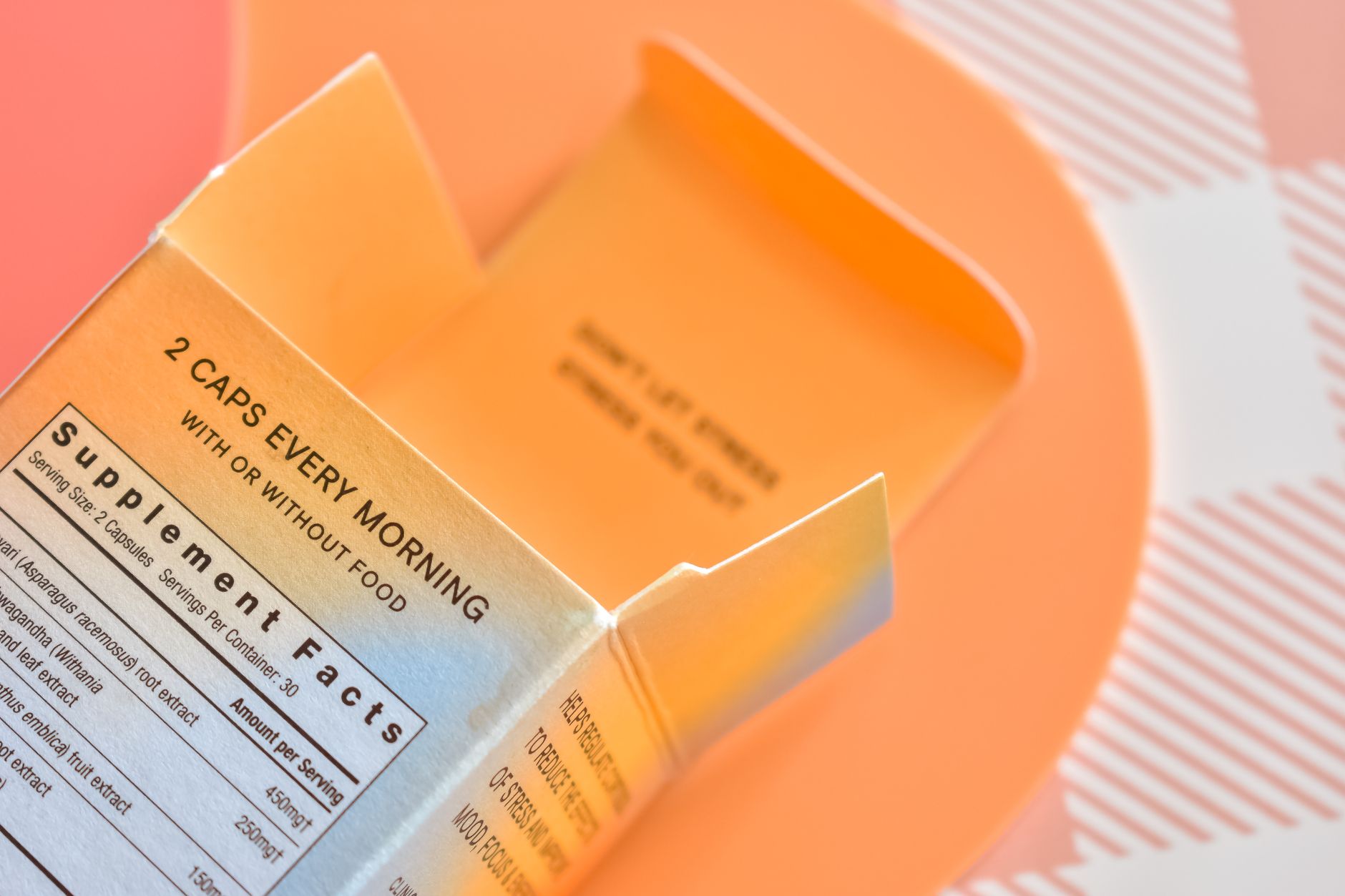
The Supplement Facts panel is the centerpiece of dietary supplement labeling. It must include the serving size and servings per container; the name and quantity of each dietary ingredient per serving; the percent Daily Value (%DV) for each ingredient where an established DV exists; a dagger symbol (†) for ingredients without a DV; and a footnote stating “†Daily Value not established.” Ingredients without an established DV must be listed in descending order of predominance by weight.
FDA specifies exact formatting requirements for the Supplement Facts panel — type size, spacing, borders, and layout. These are not design suggestions. A panel in a non-compliant format is a labeling violation even if the underlying data is accurate.
The Other Ingredients List
Beneath the Supplement Facts panel, a separate “Other Ingredients” list must declare all non-dietary-ingredient components of the product — excipients, fillers, coatings, colors, and flavors — in descending order of predominance by weight. Common other ingredients include microcrystalline cellulose, magnesium stearate, silicon dioxide, and hypromellose (vegetable capsule). FDA’s food allergen labeling requirements apply to dietary supplements, so if any of the eight major allergens are present in your other ingredients, they must be declared.
Net Quantity of Contents
The net quantity statement declares how much product is in the container, expressed in weight, volume, or count (e.g., “60 capsules”). It must appear on the principal display panel in a specific type size relative to the label area. For products sold by count, the net quantity must state both the count and the net weight.
Manufacturer or Distributor Information
Every label must include the name and place of business of the manufacturer, packer, or distributor. For private label brands, the distributor’s name and address — not the contract manufacturer’s — typically appears on the consumer-facing label. This is standard industry practice and fully compliant with FDA regulations.
Dietary Supplement Labeling Requirements for Claims
Claims on supplement labels are the highest-risk area of labeling compliance. FDA and the FTC jointly regulate supplement claims, and the line between a permitted structure/function claim and an illegal drug claim is often narrower than brands expect.
Structure/Function Claims
Structure/function claims describe how a nutrient or dietary ingredient affects the structure or function of the human body. “Supports immune health,” “promotes healthy digestion,” and “helps maintain bone density” are all structure/function claims. These are permitted without FDA pre-approval — but require three conditions: the claim must be truthful and not misleading; it must be substantiated by competent and reliable scientific evidence; and the label must carry the required disclaimer. FDA must also be notified within 30 days of first marketing a product bearing a structure/function claim.
Health Claims
Health claims describe a relationship between a nutrient and a disease or health condition — for example, “calcium reduces the risk of osteoporosis.” Unlike structure/function claims, health claims require FDA pre-authorization. Unauthorized health claims are a significant regulatory violation. There are also “qualified health claims” that meet a lower evidentiary standard but must carry FDA-mandated qualifying language limiting the strength of the claim.
Nutrient Content Claims
Nutrient content claims characterize the level of a nutrient — “high in,” “excellent source of,” “free of,” or “low sodium.” FDA defines specific thresholds that must be met before these terms can be used. “High in vitamin C” requires at least 20% of the daily value per serving. Using nutrient content claim terminology without meeting the regulatory threshold is a labeling violation regardless of intent.

The Mandatory Disclaimer Statement
Any supplement label that makes a structure/function claim must include the following disclaimer, word for word:
“These statements have not been evaluated by the Food and Drug Administration. This product is not intended to diagnose, treat, cure, or prevent any disease.”
The disclaimer must appear prominently and conspicuously — in a box, set off from other text, on any labeling (including inserts and pamphlets) that contains the claim. Many emerging brands overlook the 30-day FDA notification requirement that accompanies this disclaimer obligation.
Common Labeling Mistakes That Trigger FDA Warning Letters
FDA issues dozens of dietary supplement warning letters annually. The most frequently cited labeling violations are:
- Disease claims without drug approval — “Treats anxiety,” “cures inflammation,” or “prevents cancer” are drug claims that require FDA approval. These are the most serious labeling violations and can lead to product seizure or injunction.
- Missing or non-compliant Supplement Facts panel — Omitting ingredients, incorrect formatting, or failing to list %DV where established values exist.
- Missing structure/function disclaimer — Making structure/function claims without the required disclaimer, or formatting the disclaimer incorrectly (not in a box, not set off from text).
- Unapproved health claims — Using health claim language without FDA authorization.
- Allergen labeling failures — Not declaring major food allergens present in the product or shared manufacturing environment on the label.
- Failure to notify FDA — Not submitting the required 30-day notification after first marketing a structure/function claim product.

What Your Contract Manufacturer Provides for Label Compliance
When working with a contract manufacturer, the division of labeling responsibility matters. A qualified manufacturer will provide:
- Supplement Facts data — Accurate ingredient names, quantities, and %DV calculations based on finished formula testing.
- Other Ingredients list — A complete and accurate list of all excipients and processing aids used in manufacturing.
- Allergen declarations — Identification of all allergens present in the product and the manufacturing environment.
- Net quantity verification — Confirmation that labeled net quantity matches actual fill weight or count from the production run.
The brand owner is responsible for claims language, the disclaimer, label graphic design, and FDA structure/function notification. A manufacturer who reviews your label for compliance before printing adds meaningful risk reduction. For more on what rigorous quality documentation looks like, see our post on supplement certificates of analysis and our guide to cGMP supplement manufacturing and FDA registration.
Supplement Labeling Support at Atrium Scientific
At Atrium Scientific, every product we manufacture ships with verified Supplement Facts data based on actual batch testing — not theoretical formula calculations. We provide accurate other ingredients declarations, allergen disclosures, and net quantity data to support compliant label development for our brand partners.
Explore our full manufacturing capabilities on our services page or contact our team to discuss your labeling and manufacturing requirements.
Frequently Asked Questions About Dietary Supplement Labeling Requirements
What must appear on a dietary supplement label?
Every dietary supplement label must include: the product statement of identity, the net quantity of contents, the Supplement Facts panel (with serving size, ingredient names, quantities, and percent Daily Values), the Other Ingredients list, the name and address of the manufacturer or distributor, and — if structure/function claims are made — the required FDA disclaimer.
Can I make health claims on my supplement label?
Structure/function claims (e.g., “supports immune health”) are permitted without FDA pre-approval, provided they are truthful, substantiated, and accompanied by the required disclaimer. Authorized health claims (e.g., calcium and osteoporosis) require FDA approval. Disease claims (e.g., “treats diabetes”) are never permitted on dietary supplements — they classify the product as an unapproved new drug.
What is the required disclaimer for supplement structure/function claims?
The required disclaimer reads: “These statements have not been evaluated by the Food and Drug Administration. This product is not intended to diagnose, treat, cure, or prevent any disease.” It must appear prominently on the label in a box, set off from other text. FDA must also be notified within 30 days of first marketing a product with a structure/function claim.
Does my contract manufacturer’s name have to appear on my label?
No. For private label products, the distributor’s name and address — your brand’s information — typically appears on the consumer-facing label. FDA only requires that the name and place of business of the manufacturer, packer, or distributor appear. Using your brand’s name as the distributor is fully compliant and standard industry practice.
What are the most common FDA warning letter triggers for supplement labeling?
The most common triggers are disease claims on supplement labels, missing or non-compliant Supplement Facts panels, missing structure/function disclaimers, unapproved health claims, and failure to declare major food allergens. FDA issues dozens of supplement warning letters annually, and labeling violations are among the most frequently cited issues.