
Contract Manufacturing vs. Private Label Supplements: What’s the Difference?
If you are starting or scaling a supplement brand, one of the most fundamental decisions you will make is how your product gets made. Most new brand owners use the terms “contract manufacturing” and “private label” interchangeably — but they describe meaningfully different business models with different cost structures, timelines, intellectual property implications, and competitive outcomes. Choosing the wrong model for your stage of business or strategic goals can cost you months of development time or lock you into a formula you cannot differentiate. This guide explains precisely what each model means, introduces a third option that is frequently overlooked, and provides a practical framework for deciding which approach is right for your brand.
Contract Manufacturing: Custom Formula, CMO Production
Contract manufacturing means a brand owner supplies a proprietary formula to a CMO, which manufactures it using its facility, equipment, and quality systems. The brand owns the formula, IP, and regulatory responsibility. Private label supplements use the CMO’s pre-developed stock formulas with the brand’s label applied — faster and cheaper, but with no formula differentiation or IP ownership.
Contract manufacturing — sometimes called custom manufacturing — is the model in which you develop a proprietary formula and commission a contract manufacturer (CMO) to produce it at commercial scale. The formula is yours: you own the intellectual property, control the ingredient selection and ratios, and can manufacture it exclusively or take it to a different CMO if needed.
How the Contract Manufacturing Process Works
- Formula development: You or your R&D team (or the CMO’s formulation team working to your specifications) develop the formula. Active ingredients, doses, excipients, and delivery format are all determined at this stage.
- Formulation validation: The CMO produces pilot batches to validate the formula — confirming stability, content uniformity, sensory properties, and manufacturability at scale.
- Production agreement: You sign a manufacturing agreement specifying batch sizes, pricing, lead times, quality standards, and intellectual property ownership.
- Commercial production: The CMO produces batches to your specifications, issues a Certificate of Analysis for each batch, and ships finished goods or bulk product to your fulfillment operation.
Who Owns the Formula?
In a true contract manufacturing arrangement, the formula is the brand’s intellectual property — provided the development agreement clearly specifies this. Review any manufacturing agreement carefully for language around formula ownership, exclusivity, and what happens if you switch CMOs. A reputable CMO will clearly document formula ownership in the contract.
Private Label: Stock Formula, Your Brand

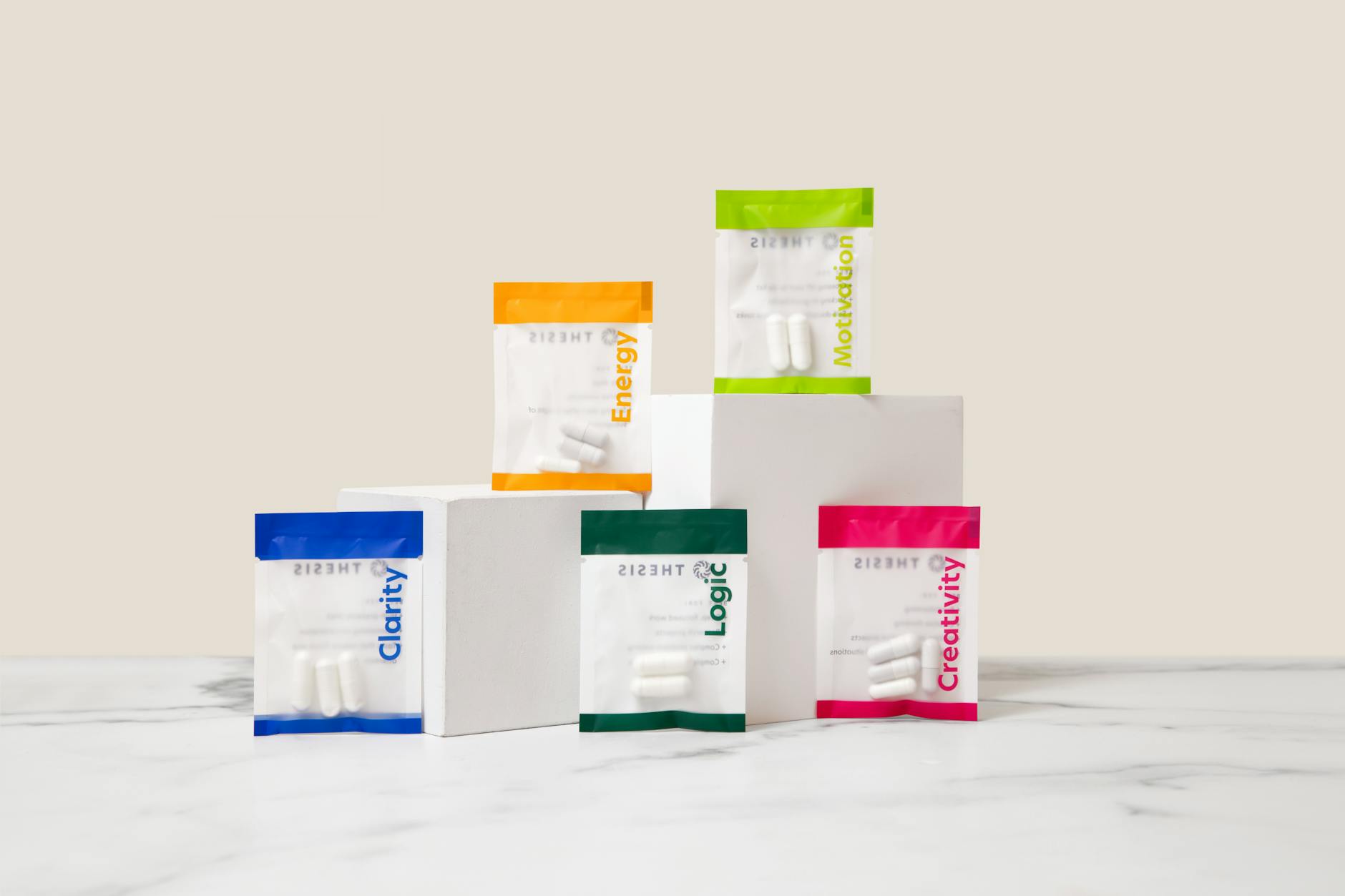
Private label — also called white label — is the model in which you apply your brand identity to a pre-existing, pre-validated formula owned by the manufacturer. The CMO has already developed and validated the formula; you are licensing the right to sell it under your own label. You do not own the formula and cannot take it to a different manufacturer.
How Private Label Works
- Select from the CMO’s catalog: The manufacturer offers a portfolio of stock formulas — capsules, powders, liquids, ODF strips — at various price points.
- Label and packaging: You provide your brand name, label design, and any customization within the manufacturer’s allowable parameters (sometimes limited flavor or dosage adjustments are permitted).
- Minimum order quantity: You order a minimum quantity, typically lower than custom manufacturing minimums, since no development work is required.
- Receive finished, labeled product: The CMO ships shelf-ready product with your label applied.
The Competitive Limitation
The core limitation of private label is that multiple competing brands can sell an identical or near-identical product under different labels. If your CMO sells the same sleep formula to ten brands, your product is not meaningfully differentiated except by price, packaging aesthetics, and marketing. In crowded supplement categories — sleep, immunity, weight management — private label products compete almost entirely on marketing spend rather than product efficacy.
Co-Packing: A Third Model Often Overlooked
Co-packing (contract packaging) is a distinct third model that is frequently confused with both contract manufacturing and private label. In co-packing, you supply the formula — typically as a bulk powder, liquid, or active ingredient blend — and the co-packer manufactures the finished dosage form, fills containers, applies labels, and ships finished goods.
Co-packing is the appropriate model when you have developed a proprietary formula in-house or through an independent formulation consultant and want a manufacturing facility to produce it without the CMO owning any part of the development relationship. It separates formulation ownership entirely from production execution.
Side-by-Side Comparison

| Factor | Contract Manufacturing | Private Label | Co-Packing |
|---|---|---|---|
| Formula ownership | Brand owns the formula | CMO owns the formula | Brand owns the formula |
| Formula development | Custom — developed for your brand | Pre-existing stock formula | Brand supplies formula to CMO |
| R&D involvement | High — formulation, pilot batches, stability | None — formula already validated | Moderate — formula developed independently |
| Time to market | Longest — 4–12 months | Shortest — 4–12 weeks | Moderate — 6–16 weeks |
| Minimum order quantity | Higher — development investment requires scale | Lower — no development cost to recover | Moderate — depends on CMO capacity |
| Cost per unit | Higher initially; lower at scale | Lower initially; margin limited by CMO pricing | Moderate |
| Product differentiation | Maximum — unique formula, exclusive positioning | Minimal — identical to competitor products | High — your formula, manufactured efficiently |
| Intellectual property | Brand retains IP with proper agreement | No IP — formula belongs to CMO | Brand retains IP |
| Regulatory responsibility | Shared — CMO manufactures; brand markets | Shared — CMO manufactures; brand markets | Brand responsible for formula; CMO for manufacturing |
| CMO switching flexibility | High — brand owns formula and can transfer | None — formula is CMO’s property | High — brand owns formula |
When Each Model Makes Sense
Choose Contract Manufacturing When:
- You are building a brand around a specific, differentiated formula as your core competitive advantage
- Your active ingredient selection, dose, or delivery format is not available in any CMO’s stock catalog
- You are developing in a specialty format — oral dissolving films, suppositories, novel topicals — where private label options are limited
- You intend to build long-term brand equity and want formula IP you can protect, license, or sell
- You have the budget and timeline to invest in proper development and validation
Choose Private Label When:
- You are testing a new market or consumer segment with limited capital at risk
- Speed to market is your primary constraint and you can accept commodity-level differentiation initially
- Your competitive moat is built on distribution, marketing, or community rather than formula uniqueness
- You are building a proof-of-concept brand to validate demand before investing in custom development
Choose Co-Packing When:
- You have developed a proprietary formula independently and need a qualified facility to manufacture it
- You are transitioning from in-house small-scale production to commercial-scale manufacturing
- You want manufacturing flexibility — the ability to move production between facilities — while retaining formula ownership
Decision Framework: Which Model Is Right for Your Brand?

Answer these four questions to identify the appropriate model for your current situation:
1. What is your budget for product development?
Under $15,000 and timeline under 90 days → Private label is likely your only viable option at this stage.
$25,000–$75,000+ and 6–12 month timeline → Contract manufacturing is viable and strategically preferable for long-term brand building.
2. How important is formula uniqueness to your competitive positioning?
If your brand story, efficacy claims, and repeat purchase rate depend on a formula that performs demonstrably better than competitors → Contract manufacturing.
If your value proposition is primarily price, convenience, or brand aesthetic rather than formula differentiation → Private label is acceptable.
3. What is your exit strategy or long-term business goal?
Building for acquisition or licensing → Custom formula IP is an asset that increases valuation. Contract manufacturing is the clear choice.
Testing market fit before committing capital → Private label reduces financial risk while you validate demand.
4. What delivery format does your product require?
Standard capsule, powder, or gummy in a commodity category → Private label options widely available.
Oral dissolving film, suppository, specialty topical, or oral care product → Private label options are limited; contract manufacturing or co-packing is typically required.
Common Mistakes Brands Make
- Starting with private label and assuming you can “upgrade” to custom later easily. Your private label customers are loyal to the product experience, not your formula. When you reformulate, you risk breaking what made the product work for them.
- Signing a manufacturing agreement without a clear formula ownership clause. Without explicit IP language, some CMOs claim ownership of any formulation developed using their equipment or expertise. Always have a lawyer review manufacturing agreements.
- Underestimating the timeline for custom development. Brands that commit to a product launch date before starting formulation development almost always miss it. Development takes the time it takes — stability testing cannot be rushed.
- Choosing a CMO based on price alone. The cheapest private label option and the cheapest custom manufacturing quote frequently reflect shortcuts in quality systems, testing, or raw material sourcing that create liability downstream.
How Atrium Scientific Group Supports Both Models
Atrium Scientific Group offers both custom contract manufacturing and private label options across our specialty format capabilities — oral dissolving films, suppositories, topicals, cosmetics, dietary supplements, and oral care products. Whether you are developing a proprietary ODF formula from scratch, looking for a validated private label strip product to launch quickly, or need a co-packing partner for a formula you have already developed, our team can discuss the right engagement model for your stage of business and strategic goals. Contact us to start the conversation.
Frequently Asked Questions
Can I start with a private label product and transition to a custom formula later?
Yes, and this is a legitimate brand-building strategy — validate demand with a private label product, then invest in custom development once you have confirmed market fit and revenue to fund it. The transition requires a new formulation development cycle and typically a 6–12 month gap between discontinuing the private label version and launching the custom formula. Plan the transition carefully to avoid inventory gaps and manage customer expectations.
If I use a private label supplement, am I responsible for its quality and compliance?
Yes. Under FDA regulations, the brand whose name appears on the label is legally responsible for the product’s compliance with 21 CFR Part 111 cGMP requirements, labeling accuracy, and safety. Working with a reputable, cGMP-certified CMO for private label products does not transfer your regulatory responsibility — it gives you a qualified manufacturer whose quality systems you can rely on to fulfill that responsibility.
What does “white label” mean — is it different from private label?
The terms are used interchangeably in the supplement industry. Both refer to a stock formula manufactured by a CMO that is sold under a retailer’s or brand’s own label. Some industries draw finer distinctions between the two terms, but in supplement manufacturing they describe the same business model.
How do I know if a CMO’s private label formula is actually being used by my competitors?
Ask the CMO directly whether the formula is offered to multiple clients and under what exclusivity terms. Some CMOs offer regional or category exclusivity for an additional fee. Others sell their stock formulas broadly with no exclusivity. If differentiation matters to your brand, get any exclusivity terms in writing before committing.
Is contract manufacturing more expensive than private label overall?
The total development cost of contract manufacturing — including formulation, pilot batches, stability testing, and initial commercial run — is higher than private label for the same finished unit count. However, per-unit cost at scale is often comparable or lower because custom formulas are optimized for your specific cost targets rather than the CMO’s standard margin on stock formulas. The real cost comparison is over the life of the product, not just the first order.
Conclusion
Contract manufacturing and private label are not interchangeable — they are different business models with different strategic implications for your brand’s long-term value, competitive positioning, and operational flexibility. The right choice depends on your budget, timeline, differentiation goals, and where you are in your brand-building journey. Understanding the distinction clearly before you engage a manufacturing partner is one of the most important steps you can take toward building a supplement brand that compounds in value over time. Atrium Scientific Group’s team is available to discuss both models and help you identify the approach that fits your specific situation. Contact us to explore your options.
Ready to work with a U.S. contract manufacturer? Atrium Scientific Group offers both private label supplement manufacturing and fully custom contract manufacturing, with a 3,000-unit MOQ. Request a consultation to discuss your brand strategy.
Page last updated: April 18, 2026
For more context, see our guide on contract manufacturing products.
For more context, see our guide on dietary supplement contract manufacturer.