
Supplement Certificate of Analysis: What Every Brand Must Demand from Their Manufacturer
A supplement certificate of analysis — commonly called a COA — is the single most important quality document your contract manufacturer will produce. Every batch of dietary supplement that leaves a manufacturing facility should be accompanied by a COA, and every brand owner should know how to read one. Yet many emerging supplement brands sign manufacturing contracts without ever reviewing a sample COA or understanding what it must contain. This guide covers exactly what a COA is, what FDA regulations require it to include, and the red flags that expose a low-quality manufacturer before you ever receive your first shipment.
What Is a Supplement Certificate of Analysis?
A Certificate of Analysis is a formal document, issued by a manufacturer’s quality control laboratory, that records the results of all testing performed on a specific batch of product. It confirms that the batch was tested against a predetermined specification — and either passed or failed each test. A COA is not a marketing document. It is a quality record, and it should be traceable to the specific batch number, manufacturing date, and testing methods used.
In the dietary supplement industry, COA documentation is required under FDA’s cGMP regulations (21 CFR Part 111). Every batch of finished supplement must be tested — or exempted from testing only with documented scientific justification — before it can be released for distribution. The COA is the paper trail that proves this testing happened.
What a Complete Supplement COA Must Include
A thorough COA covers four testing domains. Any COA missing one of these sections warrants a direct conversation with your manufacturer about why.

Identity Testing
Identity testing confirms that the ingredients in the batch are actually what they claim to be. Adulteration — substituting cheaper or different ingredients — is a documented problem in the supplement industry, particularly for botanical extracts. Identity testing methods include HPTLC (High Performance Thin Layer Chromatography), DNA barcoding for botanical ingredients, FTIR spectroscopy, and HPLC with reference standard comparison. A COA that lists only visual inspection as the identity test method is a red flag.
Purity and Potency Testing
Purity testing confirms the batch contains no unacceptable levels of adulterants. Potency testing confirms that active ingredients are present at the labeled amount — within an acceptable variation range. FDA regulations require that finished products meet 100% of the labeled amount of each dietary ingredient. HPLC and mass spectrometry are the standard methods for potency testing. Your COA should show the specification (e.g., “NLT 90% labeled amount”), the tested result, and a pass/fail determination for each ingredient.
Microbiological Testing
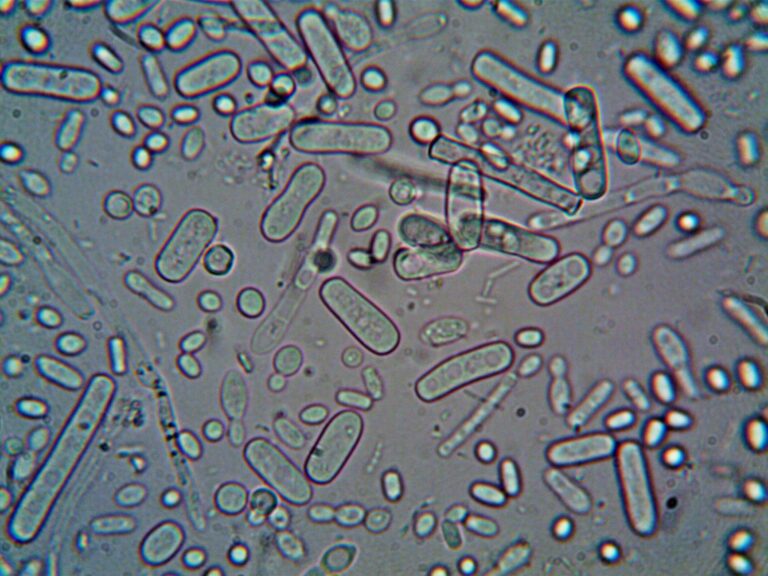
Microbial testing checks for pathogenic and indicator organisms that would make the product unsafe for consumption. Standard microbial tests for dietary supplements include Total Aerobic Microbial Count (TAMC), Total Yeast and Mold Count (TYMC), and specific pathogen tests for Salmonella, E. coli, and Staphylococcus aureus. Products consumed orally — especially powders, liquids, and chewables — require thorough microbial testing because manufacturing environments can introduce contamination even in facilities with excellent hygiene practices.
Heavy Metals and Contaminant Testing
Heavy metals — lead, arsenic, cadmium, and mercury — occur naturally in soil and can concentrate in botanical ingredients. California’s Proposition 65 and USP dietary supplement standards set specific limits for heavy metals in finished products. A compliant COA will show heavy metals testing results against the applicable specification. This is increasingly important as state regulators and retail buyers (Amazon, Whole Foods, major pharmacy chains) require heavy metals data as a condition of product listing.
COA Requirements Under FDA 21 CFR Part 111
FDA’s 21 CFR Part 111 cGMP regulations for dietary supplements define the legal floor for COA documentation. Key requirements include:
- Component identity testing — Every dietary ingredient must be positively identified before use. A manufacturer cannot simply rely on a supplier’s COA; they must perform their own identity test on every incoming lot.
- Finished batch testing — A statistical sampling of finished product from each batch must be tested against specifications for identity, purity, strength, and composition.
- Batch records — Every batch must have a complete manufacturing record linking it to the specific COA, raw material lot numbers, equipment used, and operator sign-offs.
- COA retention — Records must be retained for at least one year past the product’s shelf-life expiration date, or two years past the distribution date if the product has no expiration.
A manufacturer who cannot produce their COA template or discuss their testing protocols in a pre-contract conversation is not yet operating at the standard FDA expects. This is a disqualifying finding during vendor evaluation — not something to overlook in favor of a lower price.

Third-Party vs. In-House COA Testing
COA testing can be performed in-house by the manufacturer’s own laboratory or outsourced to an accredited third-party laboratory. Both approaches are valid under FDA regulations — what matters is that the laboratory is qualified, uses validated methods, and maintains calibrated, documented equipment.
What NSF Certification Means for Your COA
NSF International’s dietary supplement certification program adds a layer of independent verification above the FDA cGMP floor. You can search NSF’s certified dietary supplement database to verify whether specific products or manufacturing facilities carry NSF certification. NSF-certified products are tested by NSF’s own laboratory against the label claim, and facilities are audited against NSF’s manufacturing standard. For brands selling into professional channels — healthcare practitioners, sports nutrition retailers, pharmacy chains — NSF certification is often a requirement, not a preference.
When to Require Third-Party COA Verification
Even when working with a reputable manufacturer with an in-house lab, brands with high-profile retail relationships or specific ingredient potency claims should consider requiring a third-party verification COA on at least a subset of batches. The cost is modest — typically $200–$800 per batch depending on the panel — and provides independent confirmation of your manufacturer’s in-house results. This is especially valuable for products with quantitative label claims such as “1 billion CFU” or “500 mg standardized extract.”
Red Flags in a COA: What to Watch For
Not all COAs are equally rigorous. These red flags in a manufacturer’s COA documentation indicate quality shortcuts that put your brand at risk:
- No lot or batch number — A COA without a traceable batch identifier cannot be linked to a specific production run, making recalls and FDA audits impossible to manage properly.
- Specification listed as “conforms” — A COA that describes the specification as “conforms to standard” without a defined numerical range gives you no usable information. What is the standard? What result constitutes a pass?
- Missing identity testing — If the COA shows only physical appearance and moisture content, identity testing has been skipped — a direct violation of 21 CFR Part 111.
- No method reference — Each test result should reference the analytical method used (USP, AOAC, or a validated in-house method number). A COA without method references cannot be independently verified or reproduced.
- Unsigned or undated — A valid COA must be signed by a qualified person (QC manager or above) and dated to indicate when testing was completed. Unsigned COAs are not legally traceable documents.

How to Use a COA When Evaluating Contract Manufacturers
Before committing to a manufacturing partner, request a sample COA for a product similar to yours. This single document tells you more about a manufacturer’s quality culture than any sales conversation. Compare it against the checklist in this post and ask these follow-up questions:
- Do you perform identity testing on every dietary ingredient lot, or only on new supplier qualifications?
- Which tests are performed in-house versus outsourced to a third-party laboratory?
- What is your batch release timeline — how many days from end of manufacturing to COA issuance?
- Do you retain retain samples from every batch, and for how long?
- Have you had any batch failures in the past 12 months, and what was their disposition?
For a broader framework on evaluating manufacturing partners, see our guide on how to choose a dietary supplement contract manufacturer, which covers 10 critical questions every brand owner should ask. Our post on cGMP supplement manufacturing and FDA registration also provides context on what operating under cGMP standards means in practice.
COA and Quality Assurance at Atrium Scientific
At Atrium Scientific, every finished batch ships with a complete Certificate of Analysis covering identity, potency, microbiology, and — where applicable — heavy metals and contaminant panels. Our in-house quality control laboratory performs testing to validated methods, with full batch traceability from raw material receipt through finished goods release.
We operate under FDA-registered cGMP standards and support brands through the full product lifecycle, including stability testing and shelf-life substantiation. To learn more about our manufacturing capabilities, visit our services page or contact our team to discuss your specific product requirements.
Frequently Asked Questions About Supplement COA Documentation
Is a Certificate of Analysis legally required for dietary supplements?
Yes. Under FDA 21 CFR Part 111, dietary supplement manufacturers must test each batch against specifications for identity, purity, strength, and composition before releasing it for distribution. While FDA regulations do not require the document to be specifically titled “Certificate of Analysis,” the testing and record-keeping requirements effectively mandate COA-level documentation for every batch produced and released.
Should I request a COA before or after placing a manufacturing order?
Both. Request a sample COA for an analogous product before signing a manufacturing agreement — this evaluates the manufacturer’s quality documentation standards before you’re financially committed. Once your product is in production, you should automatically receive a COA for each batch with your finished goods shipment. A manufacturer reluctant to share sample COAs during vendor evaluation is one to approach with caution.
Can I use my manufacturer’s COA to sell on Amazon?
Amazon’s supplement listing requirements have tightened significantly and vary by category. Many supplement categories now require third-party testing COAs from accredited labs — not just manufacturer-issued COAs — as a condition of listing or reinstatement. If Amazon distribution is part of your channel strategy, discuss Amazon’s specific testing documentation requirements with your manufacturer before formulation and production begin.
What is the difference between a COA and a spec sheet?
A specification sheet defines what a product or ingredient must be — the acceptable ranges for each tested parameter. A COA documents the actual tested results for a specific batch against those specifications. The spec sheet is the standard; the COA is the evidence that the standard was met. Both documents should be available for every product you manufacture and distribute.
How long should I keep supplement COA records?
FDA 21 CFR Part 111 requires COA records to be retained for at least one year past the product’s expiration date, or two years past the distribution date if no expiration date is used. As a brand owner, even if your contract manufacturer retains the primary records, maintain your own copy of every COA for every batch you distributed — this is essential for managing any recall, regulatory inquiry, or customer complaint efficiently.